Pages

Tuesday, January 27, 2009

Snapshot Book Review: American Wife

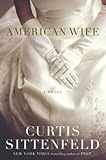
American Wife: A Novel American Wife: A Novel by Curtis Sittenfeld


My review


rating: 4 of 5 stars
This is certainly Curtis Sittenfeld’s most mature novel to date. Prep is probably still my favorite, for its absolute realism and perfect glimpse into the adolescent mind and emotions. Ironically, Many of My Dreams followed chronologically—it showed the life of a woman as she grew out of adolescence, through her twenties and thirties and into “womanhood.” Now, with “American Wife,” Sittenfeld continues this chronology, structuring the tone and “telling” of the book around the later, middle-aged years of the novel’s female protagonist, Alice Blackwell. (I am curious to see if her next book will be about the life of a senior citizen!)

American Wife is beautifully crafted. Sittenfeld uses the thoughtful introspection of her second novel while retaining the cohesive “plot drive” of her first as she moves the story through Alice’s life. Sittenfeld manages to link each event that Alice lives through to both the preceeding events and the events to come without slamming the reader over the head with these revelations—a feat that is certainly no small task. However, this praise does not come without its own criticism, however, because Sittenfeld clearly felt that this in-and-of-itself was not enough. When she went and began to narrate Alice’s life as the wife of President Charlie, that was when I felt the novel began to fall apart.

First of all, with all of the contemporary references to Iraq, 9/11, abortion, and the like, how are readers not supposed to identify these characters with the Bush family and administration? Living in the present and trying to fill real, speculated-upon roles with fictional characters is just not something that is feasible, never mind enjoyable, to do. If Sittenfeld wanted to write a book about what she thought Laura Bush was like without doing any actual research, then she should have done that. Likewise, if she wanted to write a generic novel about “a first lady” of “an administration,” then perhaps she could have set her novel in the future, or she could have timed her novel to come out pre-election, before any votes had even been cast for who would run for president. However, writing about a real role filled by a very public figure and casting in it a fictional character—this was the point in the novel at which I actually became disinterested. It was decidedly too much work for me to suspend my disbelief, and my mind kept trying to make connections and to determine what she was “really saying.” However, having read reviews and the forward and afterward in the book, I knew this was not the intent. It was overall a frustrating final quarter of the book for me, and I would have been quite pleased had Sittenfeld finished the novel some entirely other way—perhaps with Charlie losing the Wisconsin governor election and following some other life path entirely, thus taking Alice along with him.

All of this being said, I am intrigued to see what Sittenfeld writes next. Her novels have all followed an eerily similar arc, yet they have been very disparate, as well. I will always recommend Prep first, to those who have never read her, but American Wife will remain on my list of recommendations, if merely for a conversation piece, because I am sure many other readers will disagree with me about the last fourth of the book.


View all my reviews.

Monday, January 26, 2009

Seconds of Space in a Subway Station


I know of a moment. It’s a moment lived on a precipice. It’s a moment composed of space: a few inches containing a few seconds between safety and destruction, between normal mundane life and pain, mutilation, and chaos.

This moment occurs every day, sometimes more than once a day. I stand on the edge of the platform, my toes overlapping the yellow “warning” stripe intended to keep patrons out of harm’s way. The paint is so worn that only a vague flecked outline indicates there ever was a stripe at all. The light underground is dingy, causing the subway’s white headlights to glare even more brightly as it approaches. From far away, the train seems to barely move, and people on the platform shuffle impatiently, craning their necks to look and then hustling back toward the middle of the platform. Then it is zooming by, air whooshing in my face, metal cars flashing by me with the speed of playing cards being shuffled. It roars and squeals like a metal beast, and as I watch the cars whiz past, I have a fleeting impulse to close that six-inch gap.

What would it feel like, to throw yourself against a moving subway train? Would you be instantly repelled, thrown back into the crowd of passengers with your clothing ripped and blood pouring from a gash on your forehead? Or would you somehow adhere to the car and be pulled along at that breakneck speed, even for just a moment? What if you were to merely extend an arm? Would it be snapped like a toothpick? Would it be yanked out of the socket, like yanking a drumstick out of your turkey on Thanksgiving? Would the pain be immediate, or would shock initially replace pain—would you be so surprised at your own bravery, your impulsiveness, that you would be suspended in time and feeling?

It’s the speed that gets me thinking this way, I think. And the proximity. And the possibility.

Friday, January 23, 2009

A Time and Place for Religion

I was shocked and, I will admit, a bit appalled that a pastor was allowed to say The Lord’s Prayer at Barack Obama’s inauguration. After a wrenching initial gut reaction, I wanted to know, “What happened to the separation of church and state?” So I decided to do a little research, and what I found was the same journalistic bewilderment as I felt. Essentially, while we have become a more diverse and allegedly accepting country—considering that we did just elect an African-American president—our ceremonial religious displays have grown more and more religiously conservative over the years.

The very first inaugural prayer was given in 1937, and until 1985, every prayer (except one, made in 1981) happened with clergy of several different faiths and/or denominations represented on the podium. Thus, the spirit of the Constitution was upheld, because no one faith was being promoted above another and, consequently, no single faith was being promoted by the state. The “American pastor” model began in 1989, and the next two inaugurations featured prayers that used very broad, inclusive language, referring to “God” generally. After that came the Protestant-only model, with a reference to the trinity in 1997 and an appeal to “Jesus Christ our savior” in 2001. Now, here we are in 2009, professing the full Lord’s Prayer in front of the entire world. Honestly, I am embarrassed for our country. We criticize other countries for having leaders who rule by their religious convictions, and then we start a new administration by allowing a pastor to give a longer speech than the new president. It doesn’t seem right.

For more news and information on the history of inauguration prayers, check out these articles:

  • The Power of Prayer
  • Pastor Warren Sets Inclusive Tone at Inaugural
  • Wednesday, January 21, 2009

    Warm Fuzzies #7: A Natural...ly Hard Worker

    My aunt recently revised her catering menu (she is a registered dietician and cooks meals in people's homes for them). Each time she does this, she sends it out to our family and a few friends, to get our feedback. In the past, I haven't either had the time or the desire to write much in response, but this time around, I drafted a summary what I thought were the strengths and weaknesses of the menu, along with my suggestions, and sent them back to her. I basically just did what I had always done for my friends, and then for Write-On (the online version of Writing Fellows); it wasn't anything special. Or at least it didn't feel like anything special until I received her enthusiastic response.

    Allison,

    Wow! thank you so much for your very insightful and specific comments. And such discreet manner, also--you are either a natural at editing, or you've been working at your style. I'm going to pass this compliment onto your parents. We are all so proud of you!

    It is indescribably gratifying to be told you are good at something you enjoy doing. I enjoy reviewing documents and providing that sort of critical feedback. Now all I need to do is find someone who is equally enthusiastic about my capabilities and is willing to pay me for them....

    Sunday, January 18, 2009

    Life Plans…at 17? At 23?

    Over Christmas, I went back to Pittsburgh to spend the holiday with my family. During those short five days, I managed to spend a few hours going through boxes of old high school and college material I had, for some ridiculous reason, saved: binders, notebooks, folders, etc. As I rooted through these materials, I came across one particularly hefty binder marked “11th Grade Portfolio.” I remember this project well. In Mrs. Seiffert’s junior-year AP English class, each student compiled his/her writings for that year and reflected upon them. Of course, I had taken the project beyond the course requirements and included writing from previous years and from other classes, making my binder by far the largest of anyone in the class.

    Now, nearly six years later, I opened the cover of the binder and came upon the opening pages of this project: a grand “Mission Statement” and “Five-Year Plan” that we were to write as part of our preparation for prosperity and success. Of course, very few 17-year-old high school juniors have any idea what they want to eat for lunch next period, never mind what they want to do with the rest of their life. Still, in neat bulleted items, I had diligently my various aspiratios of what I hoped to own, do, and become.

    Here are a few of the items I listed:


    • (I aspire to become) Well-respected: earn and maintain the respect of my peers both in school, in my future career, and in social situations that I will encounter
    • (I aspire to [do]) Travel
    • (I aspire to have) a consistent exercise routine
    • (I aspire to have) enough money to be comfortable
      (I aspire to have) loving, loyal, lifelong friends
    • (I expect to become) a friend
    • (I expect to become) an editor
    • (I expect to become) a writer

    How on earth was I so prescient at 17 years of age? It is eerie to think that these are goals I have either already obtained or am currently working to obtain.

    Likewise, we had to draft a five-year plan that same year: a plan for the next and last year of high school, and then for the first four years after that. Again, I somehow had magical predictive powers back when I was 17. My senior year plan went almost exactly according to plan: I earned straight A’s, I decided what friendships I should work to maintain, I narrowed down the subjects I would want to pursue in college, I found and applied to colleges that matched my interests, and I won scholarships that enabled me to attend the college of my choice.

    The next year did not follow my “plan;” according to what I wrote, I was supposed to take a gap year to travel to South America to become fluent in Spanish. Instead, I jumped straight into the third year of my plan and carried out my own self-directions: earn high academic status, “establish a regular exercise regimen,” create a plan to take numerous writing courses, and make new friends while keeping in touch with the old ones. Sophomore year stayed true to form as well, as I “gained work experiene through an internship,” upheld my academic status, mapped out my major, and worked on renewing my scholarships.

    Ironically enough, I even factored I the possibility that I would study abroad my junior year—which I ended up doing. How could I have predicted myself so well? It’s not as though I had posted this plan on a wall somewhere and consulted it every time I made a decision. I only wrote it to fulfill an assignment…in 11th grade!

    Incredible, that I might actually know myself so well.