Pages

Saturday, December 28, 2024

Top 10 Books of 2024 and Who Should Read Them

Welcome to the 2024 Top 10 roundup!

I read 53 books this year (a middling amount compared to 48 last year and 56 the year before). Of course, this only counts published books. I read nearly a dozen unpublished manuscripts as well, including my own. (More to come on that next year, perhaps....)

When I wasn't reading for pleasure, I was reading for work. In the fiction arena, I edited a second-chance romance between a female CEO and a male yoga instructor, a workplace romance in toy manufacturing, and a murder mystery involving a nonprofit. I also edited several nonfiction books on topics that included career development, an alternative to traditional grading, and attributes of rebel uprisings. (Variety is the spice of life — and of work!)

I never publicly assess books I worked on, so from my 53 pleasure-reading selections, here are the 10 I enjoyed most.

Chain-Gang All-Stars
Nana Kwame Adjei-Brenyah

This is: arguably my favorite book of 2024. It's a multi-perspective, semi-futuristic, satirical examination America's prison system-turned-gladiator-style-entertainment.

I liked it because: it's smart and insightful, it's funny in a sort of sickening/ironic way, and it moves quickly. I'm also predisposed to like books that are told from multiple characters' viewpoints, and Adeji-Brenyah does this with the mastery of an expert short story writer. (In fact, I also wanted to include his book of short stories, Friday Black, on this list, but there were so many other 4-star books worth platforming, I decided to stick to a one-book-per-author-per-year rule. For now.)

Read this if you: like to say "I read the book" when your friend tells you about a TV series. (Mark my words, this will become one.) Also, if you enjoyed The Hunger Games and are ready for a more adult version with harsher violence and deeper themes, this is the book for you.

Just Mercy
Bryan Stevenson

This is: the author's real-life account of taking on cases of poor, incarcerated, wrongly accused convicts in Alabama. (He's a lawyer.)

I liked it because: it was eye-opening. I consider myself fairly well educated on the American prison system, and yet this book blew me away (in the worst possible way). Stevenson does an admirable job of weaving educational facts and figures around the arresting and also horrifying narratives of the American citizens whose cases he takes on.

Read this if you: want to feel simultaneously horrified at the state of injustice in this country and hopeful that the Stevensons of America can help us save ourselves. 


Birnam Wood
Eleanor Catton

This is: an eco-thriller that starts slowly and snowballs straight through the last page.

I liked it because: I've never read a novel paced like this. I also admire Catton's ability to create genuine plot twists that did not come out of left field but were instead  based on nuanced characters making decisions according to their own personalities and beliefs.

Read this if you: are willing to be patient at the outset, knowing a payoff is coming. Also if you want your fiction to touch on (but not preach about) themes such as collectivism, capitalism, and climate change.

Maybe You Should Talk to Someone
Lori Gottlieb

This is: a memoir written by a therapist about being a therapist and also going through therapy herself.

I liked it because: I am fascinated by therapists and therapy as a profession, and this book offered an inside look at both Gottlieb's patients and her own progression through therapy.

Read this if you: enjoy self-aware memoirs full of quirky characters, wry humor, and a lot of reflection (both self-directed and otherwise).

Monsters: A Fan's Dilemma
Claire Dederer

This is: a nonfiction book that looks at artists who have done terrible things and asks (per the book's cover copy): How do we balance our undeniable sense of moral outrage with our equally undeniable love of the work?

I liked it because: I ask this question of myself every time I listen to a Michael Jackson song. Dederer does a wonderful job of exploring the question thoughtfully and with context, without offering any pat answers.

Read this if you: want to read a smart, cerebral take on the question of what to do with our love of art made by (extremely) flawed humans. 

The Friend
Sigrid Nunez

This is: a slim novel about grief, and also my second sequential Nunez pick. (What Are You Going Through made last year's list.)

I liked it because: I saw myself in the narrator, who was close friends with a man whose flaws she saw vividly. Also, when the man dies, she agrees to take his aging Great Dane out of a sense of obligation to the dog and to the dead owner, despite never having owned (or wanted to own) a dog. This is something I am certain I would do.

Read this if you: are interested in the subject of grief and enjoy carefully written literary fiction.

We Need to Talk About Kevin
Lionel Shriver

This is: an epistle-style novel from the perspective of the mother of a boy who commits a school shooting.

I liked it because: it takes a good hard look at motherhood and what it means to be a flawed human who has committed to raising a child. It was an extremely difficult book to read, but in the best way; I was constantly feeling repulsed and then needing to examine why.

Read this if you: are intrigued by a book that you can't put down but can barely bring yourself to pick up. You'll feel ambivalence, disgust, and, if you're anything like me, deep empathy.

New Teeth: Stories
Simon Rich

This is: the only book of short stories to make this year's list! (Probably because I omitted Friday Black and didn't read many other collections.)

I liked it because: the stories are funny, zany, and quick, all while having both a greater message/theme and generally satisfying endings.

Read this if you: are a fan of George Saunders's wackier short stories. The voice in the writing is strong and consistent, so you'll know quickly whether Rich's writing is for you or not.

Lean Fall Stand
Jon McGregor

This is: a three-part novel: part thriller, part domestic strife, and part reconciliation.

I liked it because: it yanked me in with a thrilling first act in which McGregor writes extremely grippingly about men in Antarctica. I was also stunned by the author's ability to portray aphasia both from close proximity (in Robert's perspective as he experiences a stroke) and from afar (as other characters, such as his wife, Anna, perceive him after the stroke).

Read this if you: gravitate toward nature-forward writing from authors like Richard Powers and Charlotte McConaghy, with more of McConaghy's flair for tension.

How Not to Drown in a Glass of Water
Angie Cruz

This is: a novelette-length first-person character sketch of a 56-year old Dominican immigrant who has lost her job.

I liked it because: it is one of the most effective exercises in first-person voice I've read in a long time. The narrator, Cara, has a simple and straightforward way of "speaking," but the interwoven stories that comprise her life and the lives of those around her are anything but.

Read this if you: want to sit down with an auntie who is stubborn, naive, and too smart for her own good. Or if you enjoy first-person accounts of the immigrant experience in NYC. Or even if you just admire books that are told in the exact number of pages they needed, and not a page more.

Last year, the common features among my top-ten books were: written by women, examine death, and follow children/young adults as they develop. This year, common themes I've deduced are:
  1. Very American conflicts (prison/incarceration, school shootings, immigration, capitalism)
  2. Self-reflection
  3. No easy answers

Looking at the hard stuff is clearly why I love reading and writing!

Sunday, December 24, 2023

Top 10 Books of 2023 and Who Should Read Them

Another year, another top-books roundup.

I only read 48 books this year (vs 56 last year), but it has been super-busy year. For those interested, activities included breaking my foot (boo), vacationing in Mongolia (yay), extremely expensive gum surgery (more boo), and visiting friends around the country (more yay). It also included a huge variety of freelancing projects, from ghostwriting a nonfiction book to editing a multi-million-dollar grant. I'll say one thing for freelancing: it's never dull.

In between all of the work and life shenanigans, I read. So, from the 48 books I read in 2023, here — in no particular order — are my ten favorite.


Romantic Comedy
Curtis Sittenfeld

This is: a romantic comedy about comedy. (The protagonist is a writer for an SNL-type show who falls for the musical guest star.)

I liked it because: I love pretty much anything Sittenfeld writes. And this was the perfect romance book because it fulfilled all the genre expectations and tropes while being smart and genuinely fun to read. (Sadly, some romance books can be a real slog.)

Read this if you like: romantic comedies. Duh.

Piranesi
Susanna Clarke

This is: a strange, slim, dream-like book that takes its time and defies your expectations (whatever they may be).

I liked it because: I have never read anything else like it. The world building takes a while, but if you can stay patient, the ride is worth it.

Read this if you like: atmospheric books that aren't 12,000 pages long. And maybe Greek mythology (although I myself have no strong feelings for or against Greek mythology).


Heavy
Kiese Laymon

This is: a memoir about being overweight, male, and Black in America.

I liked it because: Laymon manages to tell his story in a way that is intensely personal while also shining a spotlight on larger issues facing our country and the people in it.

Read this if you like: intense memoirs about difficult but important subjects like race, education, mental health, and more.

Filthy Animals
Brandon Taylor

This is: a short story collection that includes a set of stories that intersect and further one another. Topics and themes include vulnerability, savagery, memory, sexuality, and things that we leave unsaid.

I liked it because: each story is complete, except, of course, the ones that are connected. (This is rarer than you would think with short stories!) And it explored difficult themes in ways I found compelling and nuanced.

Read this if you like: The Push and other novels and short stories that will make you occasionally wince or squirm a little.

The Secret Lives of Church Ladies
Deesha Philyaw

This is: exactly what the title promises: a collection of stories depicting the secret lives of church ladies (as long as you interpret the "church ladies" part loosely, at times).

I liked it because: it is clearly a collection of stories that belong together —  rare in many short story collections! — and the writing is excellent. Philyaw has incredible empathy for the characters she writes about.

Read this if you like: writers like Toni Morrison, who address Black realities head-on with no holds barred, but with a more forthright and less ephemeral tone than Morrison often takes.

Up to Speed: The Groundbreaking Science of Women Athletes
Christine Yu

This is: the one nonfiction entry on this year's list!

I liked it because: it covers a topic that is extremely important to me — the research that exists (and does not) about female athletes — but which, to my knowledge, has never before been compiled in such a complete and approachable manner.

Read this if you like: learning remarkable facts about the sports bra (it originated as two jock straps!), women's knees (and their considerably higher risk of ACL injuries!), and more.

Notes on an Execution
Danya Kukafka

This is: a literary novel (not a thriller) about a serial killer that employs multiple perspectives and multiple timelines.

I liked it because: it includes the killer's perspective, which helps build empathy for him without ever making him a sympathetic character.

Read this if you like: multiple-perspective novels that deal with difficult topics. (Also you need to be ok with second-person POV, i.e., "you.")

Demon Copperhead
Barbara Kingsolver

This is: a modern retelling of David Copperfield, set in opioid-riddled Appalachia.

I liked it because: it's written by Barbara Kingsolver (a master) and examines heavy topics (trauma, foster care, poverty, abuse, drug addiction) through a realistic yet hopeful lens.

Read this if you like: sprawling novels told by a complex yet likable character.

This is: a coming-of-age novel (where the characters keep coming of age all the way into their 30s) about friendship, love, and video games.

I liked it because: it so perfectly demonstrates that humans are both knowable and unknowable, and there are many sides to every story.

Read this if you like: Fates and Furies and other novels about complex characters struggling with the harsh realities of life and their relationships with one another. (Note: you don't have to be a gamer to enjoy this novel!)

What Are You Going Through
Sigrid Nunez

This is: a short novel that somehow manages to fold in many challenging topics — climate change, terminal illness, failed relationships, and euthanasia to name a few.

I liked it because: the writing is delicate yet tight, the topics are thought-provoking, and the narrator feels like someone I surely must know.

Read this if you like: to sit with a character who feels like a real person as they go through a very difficult life experience. 

Last year, the common features among my top-ten books were: translated, set outside the U.S., and dystopian. This year, many of the books I loved shared these commonalities:
  1. Written by women (8 out of 10 titles!)
  2. Follow children or young adults as they develop
  3. Examine death

Hoping for another great collection of titles in 2024!

Sunday, July 30, 2023

American Assholes in Mongolia

I didn’t go to Mongolia to be the American asshole.

I don’t think anyone goes abroad with the intention, right from the outset, to be a rude foreigner. However, if you’re like me, you are downright terrified of being perceived as such. You tiptoe around museums and slink into restaurants wondering how obvious it is that you don’t belong and whether you’re already doing something wrong. (Spoiler: If you’re white in Mongolia, it’s already clear you don’t belong.) You internally shudder every time you try to pronounce your tour guide’s name, imagining how many internal sighs she must be heaving. With your driver’s name, you don’t even make the attempt; you just smile, nod, and say thank-you, aka “bye-shla” (which you are 83% sure has a guttural, back-of-the-throat sound somewhere in there) a lot. You wonder if Mongolians assign bonus points for trying to pronounce their language, or if they’re more like the French and would prefer you to pry off their fingernails.

Needless to say, I spend a lot of my time abroad trying not to be the American asshole. Mongolia was no exception. And that’s why, when one of my merry band of friends started traipsing up the side of a very steep, grassy hill in Hustai National Park — on her way toward some very far-away wild horses that apparently had once been almost extinct — I had a few reservations. We’d arrived in a car, driven along one of the many, many dirt roads of the Mongolian countryside by the driver whose name I could not pronounce. We’d passed a few other cars and vans inside the park, but I’d seen none of their passengers go more than a few feet away from the vehicles. Clearly no one was here to police us; the entrance to the park was little more than a welcome banner and a very weathered-looking list of rules in spotty English. Still, was this something we were allowed to do?

So, I asked our tour guide — the Mongolian native whom we’d paid to tell us if we were about to do something stupid, dangerous, or just plain rude.

“No no, go ahead,” she said, waving at the hill. “It’s okay.”

With that reassurance, I high-tailed it up the hill after my friend. Soon all five of us tourists — four Americans and a Czech — were on the hill, closer but still craning our necks and squinting through camera lenses to see the horses, who, I will say, appeared entirely unbothered. One friend had brought a fancy camera with an even fancier telephoto lens, which he set up on a tripod and allowed us to look through. The only downside to this adventure (or so I thought at the time) took place when we traipsed back down the hill and I fell into a muddy creek. But that’s not the point of this story.

Our driver was the one who had spotted the horses, so it was no surprise that the next time he stopped our car, he had spotted more wildlife, this time animals called red deer. Like before, we all got out of the car and started up the hill (a new one) to get close enough to see the deer through our friend’s fancy camera lens. The deer were harder to spot than the horses, so after a few sub-par sightings, I decided to turn and head back to the cars. The others stayed a little longer, so I was ahead of them when I reached the bottom of the hill. There, I found another van parked behind our car and several older white people standing in front of it, staring up the hill. As I got closer, I heard a very distinct “assholes” enunciated, albeit with a European accent, from one of the men. Suddenly I was sure they were looking at me.

No sooner had I reached our car, when one of the women from their party stepped in front of me.

“Excuse me,” she said, frowning. “I must say something.”

They had been talking about us. My heart dropped.

“I come here every year, and I am just appalled. You all walk up there, bother the animals. It ruins things for everyone. Now the animals will not come closer. We will not see them maybe next year. It is ruined for everyone because you do what you like. This is very rude. It makes me very angry.”

She was glaring at me. Her voice was raised. Oh my god, she was mad at me. Me, the American. I was furthering the stereotype. She thought we were all assholes! I wanted to crawl under the car. But I didn’t.

“It makes me so angry. You all have made me angry,” the woman repeated, louder this time. 

“Understood.” That was the best I could do, as far as responses go. I felt ashamed, and also mad about feeling ashamed, and I thought I might start crying. Thankfully, with one last glare, she turned back to her comrades, who all had expressions on their face that were a cross between sneers, frowns, and suppressed laughter. They’d be talking about this the rest of the night, most likely. Those asshole Americans.

After taking a while to compose myself, I finally shared the encounter on our ride out of the park. The reactions were what I’d expected: indignation, exasperation, a little defensiveness. Everyone was sure we had been in the right and that those bossy Europeans were out of line. Upon reflection, that’s what I thought, too. But isn’t that what Americans, or perhaps even humans, always think? How would we know if we’d been in the wrong? We weren’t children trying to “get away with” something; we wouldn’t have done anything we thought was actively harmful. Getting yelled at by a stranger didn’t change our minds one bit.

This encounter clearly sticks with me. Maybe it’s because of the aforementioned terror of being perceived as the American asshole. Maybe it’s because I have an extremely thin skin and can’t handle getting yelled at by anyone, even a complete stranger. But maybe it’s because I am never quite sure how money shifts power dynamics. We were paying a lot to be there. Did our tour guide tell us what she thought we wanted to hear? Rationally, I doubt it; I think she’d have made us follow the rules if such rules existed. But emotionally? Emotionally I’m still afraid we did the wrong thing, simply because someone told me so in a loud, angry voice. I don’t know what that says about me, but it doesn’t seem great.

Saturday, May 20, 2023

This Is Not About Botox

Everyone I know has gotten Botox.

Okay okay, not everyone. Certainly no man in my life has gotten Botox (or if one has, he hasn’t admitted it). And there are a few women who I can pretty confidently say haven’t gotten any injections. But note the “pretty confidently” disclaimer—a few years ago, I would have made this declaration with certainty. “So-and-so is the last person who would get a bacterial toxin injected into their face,” I might have said. Well guess what? It turns out that the last person has been injected . . . multiple times. So, in my thirty-seventh year of life, as I look in the mirror and try not to be too mad at my teenage self—who cared nothing for cleansing or exfoliating or, honestly, sunscreen —I’m beginning to wonder whether I too am going to part with several hundred dollars every few months to have neurotoxins injected into my face. Is that the going price of female self-worth these days?

Because here’s the thing: my vanity—which comprises my many insecurities mixed with some baked-in, repressed misogyny—can weather someone else’s good genetics. I call this “luck.” The gal whose hair looks perfect in any condition, rain or shine? She’s lucky. The runner flaunting chiseled abs just three weeks after giving birth? Pure luck. The 45-year-old who has never had a wrinkle in her life? Well. I would have said she’s lucky, but now I’m not so sure. And if it’s not luck, it might be a competition—one that I am currently losing.

Don’t misunderstand; I’m not so neurotic as to think that having the Most Youthful Skin confers some sort of prize. I left that level neuroticism behind in my teenage years, along with my obsession with being Tannest of Them All. However, I’m not so naïve as to think that the appearance of aging, when no one else is aging, won’t have negative consequences.

Here in America, being old is bad, and being an old woman is worse. One of the only power cards women have to play is their sexuality, and they can only play that card while they’re young. Older women get less respect—and if you don’t want to admit this, you have to at least recognize that they get fewer favors. A nubile teenage girl barely has to smile to have men, perhaps several men, give up their seat for her on a crowded bus. A pregnant woman in her twenties or even thirties will have the same request fulfilled by someone without complaint. But a woman in her sixties wearing slightly smudged glasses and carrying a shopping bag? Senile, probably homeless; maybe if we ignore her she’ll stop asking. Don’t tell me this isn’t real; I’ve seen it.

Now, you might be thinking, “But Allison, men are not the only ones with power. Women could give up their bus seat, too.” And surely women don’t have these same biases, right?

As a sample size of one, I know I do. I am impressed by smooth, youthful, spotless skin just the way society has trained me to be impressed. Men claim they don’t notice things like skin or wrinkles, but the reality is that they are noticing; they just see whole face, the whole body—the forest. It’s us women who see the trees . . . and the branches on the trees and the leaves on the branches and the spines on the leaves. And then we dig down in the dirt to see what’s going on with the roots, because those leaves are so lush and green and perfectly shaped, how did they get like that? Nature? Yeah right.

Thus far I’m a holdout. I have not gotten Botox. Or a chemical peel. Or a laser facial. But I did buy some serums and creams. I’ve worn a drugstore facemask or two. I’m very aware of the crow’s feet blooming at the corners of my eyes and the sun spots appearing on my cheeks and the acne scars that no longer fade after I’ve lost the battle and picked that pimple open. I think what bothers me most is the fact that I wouldn’t hate these features if I saw them on everyone else. If the playing field felt even (despite a few lucky genetic anomalies) and we were all aging, if not gracefully, at least together, it would feel acceptable or at least inevitable that wrinkles are coming, gray hairs are coming, a few extra pounds are coming, and it’s okay. It means we’re lucky to still be alive.

But other people have turned this into a contest—to see who can profit off the appearance of youth for longer. And I really, really hate losing.

Friday, December 16, 2022

Top 10 Books of 2022 - And Who Should Read Them

 Apologies to all who come here for running content—or content at all. I've neglected this blog for over a year now, much to my dismay. I have been busy writing, but nearly exclusively for other people (the exception being—sort of—my articles in Runner's World).

I've also been busy reading. I read a whopping 55 books this year, probably 56 by the time the year is done . . . and that's not counting the unpublished manuscripts I read as part of my local writing group. I love discussing books and recommending them to others, so when a friend asked me for my "top 10 of 2022" I thought, You know, I should write this as a blog post. After all, book recommendations are personal! I can't just blindly recommend books with no context.

Therefore, I've created this quick recap of my favorite 10 books I read in 2022. It includes "what" the book is about, why I liked it, and who I think would most enjoy reading it. The books are listed roughly in the chronological order I read them. (Apologies for any typos; I'm done editing for the day.)


But You Seemed So Happy: A Marriage, in Pieces and Bits
Kimberly Harrington

This is: a memoir, written more like a collection of essays. The topic is the author, Harrington's divorce.

I liked it because: while I am not divorced, I related to much of what she had to say about the imbalances (and frustrations) of a heterosexual relationship. It's also funny without poking fun, and poignant without being saccharine.

Read this if you like: books about feminism, especially essay collections like Jia Tolentino's Trick Mirror; mother/wife memoirs


The Anthropocene Reviewed
John Green

This is: an essay collection about the most random assortment of things, each of which turns into a commentary on society and on the author himself.

I liked it because: I was impressed by Green's ability to start with what felt like a random "thing" (Scratch 'N Sniff Stickers! Piggly Wiggly!) and then somehow weave his personal experiences, historical anecdotes, and cultural/societal observations into a coherent, fully self-contained essay.

Read this if you like: essay collections; memoirs; self-deprecating writer dads.


If I Had Your Face
Frances Cha

This is: a novel about four South Korea women navigating impossible beauty standards and harsh economic realities.

I liked it because: it's not only a compelling story, but I learned a lot about South Korean society without feeling like I was being "taught."

Read this if you like: novels told from multiple points of view; women-centric novels; learning about life outside the US.


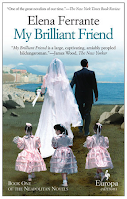
My Brilliant Friend
Elena Ferrante, Translated by Ann Goldstein

This is: a novel set in the 1950s about two female friends and their poor, close-knit community in Naples, Italy.

I liked it because: it's rare to read a book told in first person that is actually about another character. This book is narrated by Elena, but it is really about her friend Lila. The friendship is complicated, just as all real friendships are.

Read this if you like: character studies; coming-of-age novels; books about female friendships. (One Goodreads review perfectly described it as, "Anne of Green Gables if it was set in a rough Italian neighborhood and written by Donna Tartt.")


The Candy House
Jennifer Egan

This is: a slightly futuristic novel, told from multiple interlinking perspectives, where social media has evolved to capture and preserve one's memories and, in turn, allow access to others' memories.

I liked it because: the premise itself is interesting (and raises all sorts of questions around privacy!), but the fact that it is merely the glue that holds all of the intricate character stories together is even more remarkable.

Read this if you like: A Visit From the Goon Squad (its precursor); novels told from multiple points of view; George Saunders's Tenth of December; Lily King (writing style); thinking about the moral/ethical/social implications of social media.


Lessons in Chemistry
Bonnie Garmus

This is: a novel set in the 1960s about a female chemist who struggles against the sexism of her time. Oh, and she falls in love. With another chemist.

I liked it because: it's lighthearted and feel-good while having substance. Yes, there is a romance, but the real meat of the book is the protagonist, Elizabeth's efforts to fully be herself in a world that wants to put women in boxes.

Read this if you like: Gail Honeyman's Eleanor Oliphant Is Completely Fine; Maria Semple's Where'd You Go, Bernadette; "chick lit" that doesn't make you want to claw your eyes out.

Humankind: A Hopeful History
Rutger Bregman, Translated by Elizabeth Manton and Erica Moore

This is: a nonfiction book that argues that humans can, in fact, save ourselves because we are inherently good.

I liked it because: it is the first book I've read that acknowledges that we humans have made a mess of things but doesn't self-flagellate or blame some "foreign other" for our woes. Instead, it offers a sense of origin for all our doom and gloom, clears up some misconceptions, and offers a nice fresh breath of hope and optimism. 

Read this if you like: nonfiction that doesn't make you feel like the world is about to end.


A Swim in a Pond in the Rain: In Which Four Russians Give a Master Class on Writing, Reading, and Life
George Saunders

This is: an MFA writing class, as taught by Saunders, but in book form. He "teaches" seven short stories by bigshot Russian authors, namely Tolstoy, Chekhov, Turgenev, and Gogol.

I liked it because: I've always wanted to get my MFA! Also, I like Saunders's writing, and I like to discuss and analyze literature with other readers. This hit every point.

Read this if you like: Russian literature; George Saunders; learning about the craft of writing.


This is: a slim novel about a nine-year-old Syrian boy who washes ashore a small, insular island, and the teenage girl Vanna who attempts to rescue him.

I liked it because: El Akkad has made a topic that we would like to ignore (refugees and their plight) the subject of a beautifully written book about children. It is a book that stuck with me.

Read this if you like: Chris Cleave's Little Bee; books set on islands or in very small worlds; books about immigrants and refugees.


The Memory Police
Yōko Ogawa, Translated by Stephen Snyder

This is: a dystopian novel about an island where items are disappearing, along with any memories of them. But a few people can still remember, and this is not allowed.

I liked it because: it's gorgeously yet tightly written and extremely thought-provoking.

Read this if you like: Japanese writers like Kazuo Ishiguro and Haruki Murakami; dystopia; magical realism.

And now that I've written all of these mini-reviews, I've recognized a few trends. In 2022, I tended to most enjoy books that were:

  1. Translated
  2. Set somewhere outside the U.S. (and/or on an unnamed island)
  3. Dystopian

I'll have to do this little review annually moving forward to see if I discover more trends in my own preferences!

Thursday, November 18, 2021

NYC Marathon - 50th Anniversary Edition


This marathon was meant to be an experiment.

Photo credit: John Tran

Eight weeks ago, I raced the Survival of the Shawangunks (SOS) Triathlon. It was my "A" race of the season, which means it was the race where I cared most about doing my best. I put all of my physical and emotional energy into preparing for it, which for me meant that the fallout after the big day was significant. It always is.

I know full well that fitness doesn't just "vanish" after a few days (or a few weeks) off. Yet somehow, perhaps because I put so much mental and emotional energy into these races, when I try to return to training, it is an uphill battle. I say all of this because after SOS, I took a week to recover (and heal the mega-blisters on my feet), a week to ease back into bodily movement, and the next thing I knew, I had six weeks until the NYC Marathon—and it felt like I was starting from square one. This was, of course, untrue; I had built plenty of fitness over the course of triathlon training. It just wasn't the "durability" fitness forged from twelve-mile workouts or twenty-mile long runs.

So the experiment was this: How well could I translate my "overall" fitness into marathon-specific fitness in six weeks? And really, I only had four weeks, because tapering for a marathon is a two-week affair. You have to let the body really heal and stock up on glycogen before you push it for 26.2 miles!

To make this endeavor even more complex, my work life was really becoming an issue. Big projects were ramping up, and every client seemed to need increasing amounts of time and attention. Ultimately this meant I sacrificed the "little things" in training. I continued to do my pre-run warmup routine (getting older comes to demand this) and did push-ups and planks two or three times a week, but over those six weeks, I failed to lift a single weight, and I committed maybe half an hour in total to drill/form work. I did a brief recovery routine most nights before bed, but I no longer counted the hours of sleep I would get before a workout or stressed over what I was eating.

Suffice to say, it was an imperfect buildup. I knew I didn't have enough miles in my legs. I felt lucky to have squeezed in a single twenty-mile run, whereas before other marathons of late, I've done at least three runs of that length. When someone would ask me, "What finishing time are you hoping for?" I replied that I would be satisfied with breaking three hours. Yes, I was hoping to run a bit faster, but what I absolutely did not want to do was feel pressured (by myself) to go out at a pace I could not sustain and have a miserable race. I ran this marathon back in 2013 in a time of 3:18:53, and all I remember is the struggle-fest that was Fifth Avenue. I wanted some new memories.

Back in 2013, I rode the 5am Staten Island ferry to the start, wore as many warm throwaway clothes as I owned, and sat alone in the dirt on top of a black trash bag. This is what tens of thousands of runners do before every NYC Marathon, and it's what I've done before most of my 11 marathons. This year, however, I qualified to be part of the sub-elite starting group. It meant I received much of the same treatment as the professionals did: I got to ride a charter bus from midtown Manhattan to Staten Island. I got to spend the hour leading up to the race indoors at the Ocean Breeze athletic complex, where there were free bagels and bananas and Gatorade, and a track where you could jog to warm up. I got to put my warm clothes back into a bag that someone would drive to the finish line for me. And I got to be very close to the starting line when the national anthem played, the starting cannon (yes cannon) went off, and Frank Sinatra's "New York, New York" filled the air. All in all, it was pretty cushy. 10/10 would recommend.

And then there was the race.

For starters, I forgot how steep the Verrazzano Bridge is. My first mile was 7:15. The second was 6:08. I'll let you guess which was "up" and which was "down."

Coming into Brooklyn, I felt a wave disappointment. Where were the crowds? A few people were scattered on street corners here and there, but it felt nothing like the bedlam I recalled from 2013. (Fortunately, happy chaos was awaiting just a few miles down the road.)

After the first 5k, my nerves calmed down and I settled in with E___ and V___. E___ is my teammate; she had just run the Boston marathon and was hoping to improve her time from that race. I figured if I could help get her within striking distance, that would be a good use of my run. I had no idea what time V___, who I'd encountered at other NYC races, was intending to run, but the fact that she came back to us in the third mile and announced that she needed to rein in the pace seemed like a good sign. We became a pack of three.

Shortly after our pack formed, a tall, overenthusiastic guy named K___ pulled up alongside us and  announced that he was hoping to "set the world record" for the number of high-fives on the course. This may sound sweet, and in another context we might have humored him, but then he continued to try and make conversation ("What are your names? Where are you from?") while proceeding to veer in front of us so we had to stutter-step to keep from tripping over him. I could read the same thoughts behind each of our polite, strained smiles: Go away. Eventually he did.

Around the 10k mark, my left foot started to throb. This is a familiar sensation I've battled for several years. After doctor's visits, x-rays, MRIs, and physical therapy, the long and short of it is that I have a neuroma (an inflamed nerve), and the best I can hope to do is "manage it." This summer gave me the longest pain-free reprieve I've had, but in those few weeks of marathon training, the neuroma reared its ugly head. I had been hoping I could get through a good chunk of the race before it became a problem, but alas, here we were. Luckily (or not), I have experience mentally preparing for this pain—I've had to learn how to expect and accept it in every one of my last three marathons (the Olympic trials and my qualifying marathon included). And so when it started to feel like I had a golf ball emerging from the underside of my foot, I heaved an inward sigh and began the process of diverting my attention.

Photo credit: Ben Gross
Smiling and engaging with the thickening crowds was one way to distract myself. I read hand-drawn signs, made eye contact with children, and gave a "thumbs up" to anyone who looked like they were directing cheers my way. I also kept my eyes peeled for people I might know. Most of the people I was expecting to see were waiting for me on First Avenue, but I did see a few friends in Queens. This is the home-court advantage of the NYC Marathon: There's no energy boost quite like seeing someone you know rooting for you.

The Queensboro Bridge was also longer than I remembered.

Because I was running with E___ and V___, my attention was consumed by making sure we all had enough space. It takes no small amount of coordination to dodge NYC's numerous potholes and snatch tiny sloshing paper cups out of volunteers' hands, all while speeding up or slowing down to make room for your running companions. All in all, we did a fairly good job, right up until we reached First Avenue. That's the point in the race when the crowds get insane. The noise is pressing and constant, and it's virtually impossible not to get swept up, at least a little bit. I know better and I still dropped a 6:30 mile heading into the Bronx. This is when I lost E___.  Someone hopped in to run with her, and I thought, Well, I guess she has what she needs now. This would be our point of departure: she'd run her race, and I'd run mine.

V___ and I stayed together until we hit the Williams Avenue Bridge. (Yes, another bridge. There are five of them in total.) By the time I was in the Bronx, I was alone.

It was not the best part of the course to run alone, because I knew the pain was coming for me on Fifth Avenue, and I was still wondering if I'd gone out a tad fast. I had intended to take the race out in 6:50/mile pace, cut down a bit at the halfway point, and then try to hammer home the last 10k. By mile 20, I knew there was going to be no "hammering home." If I could sustain the pace I was going, that would be a success.

Photo credit: Kiersten Johnston

Fifth Avenue is painful because it is uphill. If you were to look at it, you'd barely notice, and if you were to stroll down the sidewalk, you'd be hard-pressed to call it a hill. At mile 23 of a marathon as challenging as New York, however, that slight incline makes you want to chop your legs off and beat someone with them. It hurts. And I was hurting good when I saw a woman up ahead of me in a backwards baseball cap. She looks fast, I thought. I probably won't catch her.

She also didn't look like she was hurting the way I was. As we ran down the street, she kept lifting her arms, trying to get the crowds—which were irritatingly quiet—to pump us up. I found myself joining the effort, giving a double thumbs-up as I ran in the hopes that these people would give us some energy. Why were they standing there if they weren't going to cheer?!

When we turned into Central Park, I felt a wash of relief. This was familiar territory. I knew this road. I had run it many, many times. I knew its dips and its divots, and the fact that it would eventually veer downhill. I was very much looking forward to that.

Photo credit: Emilia Benton's husband
And then I heard a scream—a literal scream—of excitement. My teammate C___ had leapt out from the sidelines and was sprinting alongside me, shouting her head off. She was supposed to have run this race but had held off for health reasons. She had every reason not to be here, and yet here she was, running alongside me, telling me how strong I looked and to go, go, go. I reached out for her gloved hand. Her enthusiasm and energy renewed my gratitude for everyone I had seen along the course: so many former teammates and current teammates and running partners and running friends and friend-friends, and even my partner R___, who was feeling under the weather. I was so grateful to be here, doing this thing.

This thing that f-ing hurt.

Those miles in Central Park feel like the end of the race. It feels like because you know where you are, and because you know where the finish line is in relation to where you are, you're nearly done. But you are not. You have to leave the park and go back onto Fifth Avenue for a little more uphill agony before going back into the park for one final, proper hill. I forgot about that part.

It felt like I was running so slowly I was moving backwards, and yet I'd left baseball-cap girl behind in the park. Turning onto Fifth Avenue, I came up alongside another girl. I fully expected her to surge, yet somehow my leaden legs carried me past her. I saw another one up ahead. Get behind her, I told myself. Get closer. I passed her, too.

I had wanted to race the end of this marathon, and here I was, racing it. But it didn't feel like racing. It felt like "surviving better." As I entered the final stretch, I survived better than a man I had seen at the beginning of the race, who had asked whether it was okay to cross to the other side of the street to see his family. (I'd said yes, so apparently I'd been right!). I survived better than a tall man with a weird gait and a short man sweating profusely. I tried with all my might to lift my knees, because the finish line was right there. I came up alongside a man in a neon green shirt, but there were still too many yards left, I'd kicked too soon. Right at the finish line, Mr. Neon Green Shirt shouldered past me.

"Good job," I grunted as I catapulted over the finish line, wobbled to a stop, and put my hands on my knees.

Didn't want to get chicked, I thought. And I smiled wide for the camera.

2021 New York Marathon Marathon Race Results


Race Length
Finishing Time
Average Pace
Overall Place
Gender Place
W35-39 Place
26.2 mi
2:53:44
6:38/mile
351 / 24,944
43 / 11,394
10 / 1,603

Thursday, September 16, 2021

Survival of the Shawangunks

“You are a survivor”

That’s what they say to you at the finish line of Survival of the Shawangunks, aka SOS, a triathlon that involves biking 30 miles and then alternatively running and swimming for a total of 18 and 2.5 miles, respectively. 

But I’m not sure I want that designation. I didn’t “survive” the race. 

Surviving would have been showing up so un(der)prepared that finishing was the accomplishment. And sure, anything can happen in a race (especially a race as crazy as this one), so there are reasons a fit, trained person might not finish. However, I felt confident going in that finishing was not going to be the challenge. The challenge was going to be getting the most out of myself and dealing with unexpected issues quickly and effectively. Because in a race with as many changeups as this one, with as many elements that I simply could not practice in training, there were bound to be at least a few issues. 

And there were.

Bike: 30 miles

Biking has been and perhaps will always be my weakest discipline. In fact, two months out from this race, I was concerned with whether I would be able to finish the 30 miles within the 2:15 cutoff time. The course starts out along flat cornfields and progresses into some rolling hills—right up until the last five miles, which are. All. Up. Hill. 

These hills were problematic for me on several levels. First, there’s the regular old speed issue: The slower you go, the worse you’ll place. And when it comes to triathlon, being slower on the bike is extra-disadvantageous because the longest leg of any triathlon is always the bike. Second, I’m not a great bike handler. In other words, when I’m climbing a hill, descending a hill, avoiding a pothole, turning, or doing virtually anything that requires attention or effort, I do not release my grip on the handlebars. And when my hands are thusly occupied, they can’t do things like rip open a packet of Gu or retrieve a water bottle—both of which would be essential to keep my internal reserves stocked up for the grueling running/swimming miles ahead.

The solution involved several gear-based adjustments devised by my friends/coaches/mentors J___ and N___.  They lent me J___’s much lighter (much more expensive) road bike, which had more gears available, which meant that I could keep my legs turning over on those climbs. They also lent me their hydration backpack so I could drink from the little dangling rubber “straw” that loops over your shoulder on my ascent rather than groping around for the water bottle cage that’s screwed in lower on the bike. It’s a good thing I had that backpack, too, because around mile 19 I accidentally dropped my regular water bottle as I was trying to get one last sip before the hills. (See? Terrible bike handler!)

Run One: 4.5 miles

The bike segment of this race concluded with dismounting and clopping across an asphalt parking lot to where we had to rack our bikes. (For anyone who has never worn bike cleats, imagine you are wearing one-inch heeled shoes, only the raised part is under your toes rather than your heel. That’s what it’s like trying to walk on flat ground in  bike cleats.) At the bike rack, a plastic bag containing my swim/run gear awaited. I don’t like to make lots of mid-race choices if I can help it, so my gear was minimal: sneakers, swim cap, and goggles. I stuffed my bike cleats, helmet, and gloves into the bag, donned my running shoes, and set off with cap and goggles in hand. (I eventually stuffed them between the strap of my sports bra and my shoulder, which is where I stowed them on every run thereafter.)

I’d practiced very few bike-run transitions (otherwise known as “bricks”) in training, so I wasn’t sure quite how I’d feel at this stage of the race. I knew the course started uphill, so even if I felt “good” I knew I wouldn’t be running fast. To my surprise, I ran the first few miles at a mid/low 7 min/mile pace, and I felt fairly in control. Of course, then the hills kicked. The iconic “Cardiac Hill” occurs in that first run, so my pace slowed, but I’d been expecting it, and all in all I didn’t feel terrible—which made me optimistic for the remaining several hours of racing.

Swim One: 1.1 miles

One of the things that makes this race unusual is the fact that you have to bring your shoes with you into the water. No other triathlons require this, because the swim is always first; you go in shoeless, come out shoeless, and then put shoes on for the biking and running segments. In SOS, you run to a lake, swim across that lake, and then get out and run again . . . to another lake. You do this three times. Therefore, if you plan to run wearing shoes, you need to bring them with you across those lakes.

How you do this is entirely up to you. Some people carry dry bags, others stuff their shoes into the zip-up section of their tri suit. My plan (courtesy of race veteran “Dr. Mike”) was to stuff the shoes up the back of the legs of my tri suit. If you want to try this at home, take a sneaker and hold it against the back of your thigh, toes pointed toward your butt, sole out. Now imagine you’re wearing spandex shorts, and jam the shoe in between the shorts and your upper thigh so they’re nice and snug and ready for a swim. That was the strategy, and it worked! The most difficult part was getting the shoes on and off my feet. In this first swim, it wasn’t so bad, because I was still wearing socks, which I had worn on the bike. (Pro tip: Don’t try to swim in socks. I gave it a shot, but after a few hundred meters I had to shed them. They somehow really impair your kick!)

This first swim was the longest and in the coldest lake. It was made even more challenging by two additional factors: First, the water was choppy. Like, really choppy. Ocean-swim choppy. The waves made breathing difficult, but it made sighting (the process of lifting your head to see where you’re going) almost impossible. And second, sighting was already difficult because there were no buoys. Usually in open water swims, there are bright orange, red, or yellow buoys floating in the water that you use in order to ensure you’re swimming in the right direction. However, in this lake there were only two buoys: one where you enter the lake, and where you exit a mile away. Suffice to say, I did a fair amount of breast stroking to get my head high enough to find other swimmers I could swim toward. Being half a mile from shore and unable to see what direction to swim is not great, especially in the middle of a race!

Run Two: 5.5 miles


The second run was probably the most enjoyable due to what wasn’t happening yet: I wasn’t feeling tired, and I wasn’t developing blisters. Also the terrain of this run was generally gentler, the path smoother, and the inclines and declines less steep. (Although again, I wasn’t as tired yet, so don’t quote me!) 

It’s on this run that I caught up with people from the SOS “camp” I had done a month prior, all of whom I’d judged to be formidable athletes. It felt good to breeze past them while feeling in control. The third run is going to be the tough one, I reminded myself as I pranced downhill. That’s where the real race starts.

Swim Two: 0.5 miles

Before I could get to that “tough run” though, I first had to get through the second lake swim. This one was much easier than the first, by virtue of the fact that the water was warmer and there was a yellow rope strung straight across the lake, from the entry point to the exit point. What I should have done was keep my head down and breath to my right for the whole swim so I could navigate using that yellow rope, but I was too stuck in “open water swimming” mode and kept lifting my head to look in front of me, even though there was no need. Definitely something I’d do differently next time

I passed one swimmer about halfway across, and I was three quarters of the way when a man blew by me. By the time I thought “maybe I can draft off of him” he was a whole body length in front of me—too far to catch any useful draft. I knew who it was: A___, who had been part of the camp, who had shared all of his tips and tricks, and who had said in no uncertain terms that swimming was his best discipline. I was impressed, because it’s not like I’m a particularly slow swimmer, and the guy is at least in his 60s.  But I knew I’d catch him on the run. And I did.

Run Three: 8 miles

The third run was THE run, in my mind. This was the leg of the race I really wanted to nail. It was far enough into the race that I could be sure everyone would feel miserable, and yet it was flat enough that I knew I could run it well if I did things right.

As it turns out, most of the eight miles was not just flat, but downhill. In fact, the very beginning of the route was steeply downhill, to the point of causing some serious quad damage as you try to keep from tumbling ass-over-teakettle. Thankfully that decline only lasted maybe half a mile before the pavement leveled out and transitioned back to groomed trail, and then I was off.

Now I was passing the real competitors. How did I know? Well some of them had their last names on the backs of their tri suits. That’s a sign someone’s at least taking triathlon seriously, right? Also they were all running; only one man I passed started walking, and when I saw him do it, I yelled at him to “please come along, I need company!” (He declined.) And finally, I was running fast—or at least faster than I’d expected. My plan was to run by feel, whatever a “marathon effort” should be. But thanks to the gently descending terrain, my watch told me I was cruising at a sub-7 min/mile pace. After four-plus hours of exercise, that wasn’t too bad!

About midway through this run, the trail wound past a popular climbing area. I darted around climbers who moved along the path in slow motion and cheered the way stoned Brooklynites might—with breathy, mid-octave voices that indicated they had no idea what was going on but that they were in good spirits and were happy to acknowledge my passing by. After leaving those khaki-clad groups behind, there were long stretches where I saw nothing but trees, rocks, and dirt . . . until eventually I glimpsed a woman with blond braids up ahead. Generally speaking, I’d passed a lot more men than women, so seeing her got me excited—another competitor! But soon the trail began ascending, and any ground I was gaining became moot; she vanished into the trees. I never glimpsed her again.

This ascent was the second named hill of the course, aptly called “Godzilla.” More than one person had told me they intended to walk it “so they wouldn’t cramp.” I was skeptical of the wisdom of this, so I asked a friend who had won the race a few years prior if he’d walked Godzilla. His response (after a multi-second pause to make sure I was serious) was, “Maybe I walked for a second to gather myself, catch my breath. But then I kept running.” 

All of this is to say, I hadn’t decided what I’d do on this hill before I set out, which left me straddling the two strategies: I would run (which on that gradient is more like a shuffle), then choose a tree or rock ahead, and give myself a walk break. A few steps into the “break” I’d get annoyed and choose another landmark which, when I reached it, would be when I had to start “running” again. I proceeded thusly up the never-ending hill, alternatively lambasting myself for losing sight of Blond Braids and telling myself that it didn’t matter because I wasn’t going to win this race anyway. (Plus what royally pissed me off was that I couldn’t even win this segment of the race. There is an award for “fastest third run,” but it’s an overall award, not gendered. And I might be a fast runner, but I’m not dude-fast.)

The other, progressively louder thread going through my head at this point was f*ck my feet hurt. My left foot had hurt from the start of the run, but I was now 100% confident that I’d developed blisters on the arches of both feet. I’d naively hoped that by doing a fair amount of my training runs sockless and putting waterproof Band-Aids on my heels, I might avoid damaging my feet. Alas, the best I could hope for was that at lake number three, the blisters wouldn’t burst while I wrenched my shoes off or jammed them back on.

Swim Three: 0.5 miles

By the third swim, I was feeling a little delirious (this is five hours into the race, after all), and I was excited to get this last swim done. Entering the lake required sliding under a fence and down a dirt embankment, so by the time I hit the water, I still had my sneakers on. I had real trouble getting them off, which I first attributed to doing it in the water and then to my woozy state. Only after a good thirty seconds of failure did I realize that I’d forgotten to loosen the laces.

With that problem solved, I stuffed the shoes into the legs of my tri suit and dolphin-dove in . . . only to feel sudden stabbing pain as both of my calf muscles seized up. Not now, I thought as I flexed my toes to ease the cramps. I’m so close to the end. Not now. The cramps would not let up. With every tiny flutter kick, my calves tightened from the back of my knees to my ankles, and so I did my best to move my legs as little as possible while dragging my body forward with shoulders made of lead. (No one warns you how tired running can make your arms and shoulders!) The farther I swam, the louder the voice in my head shouted, What are you going to do? How are you going to get up that last hill?

Run Four: 0.7 miles 

The last run may have loomed large in my mind, but before I could attempt that, I had to get out of the water. It was no small feat. Balancing on sore calves atop yet another rock submerged in lake water, I did my best to shove my wounded feet into sopping shoes before scrambling up a rocky wall. (That’s right, there’s veritable rock climbing in this race!) At the top I stared around in a frantic daze until a volunteer finally pointed the way forward, and onward I went, alternatively shuffling and walking, panting all the while. Blond Braids was gone, and I knew the pros had finished eons ago, and there was no one behind me, so I made an effort, but I know myself, and it wasn’t all-out.

Thanks K___ for convincing me to do this wacky race!
My feet hurt. The chafing inside my suit hurt. But I felt calm. I was almost done.

The Finish

When finally glimpsed the timer at the top of the peak, I thought there might be a mistake. I had told anyone who asked that I’d be satisfied with a sub-6-hour finish time. But the clock I was seeing read 5:20-something. My frazzled brain tried to reconcile these numbers, but the fact was that I’d actually started later than what that clock was calculating (my age group had started three minutes after the official start), meaning I’d gone even faster.

And then it was done. I crossed the finish line. Someone handed me a towel. Someone else handed me a medal. I waited for a feeling: of excitement, relief, pride, anything. I was among strangers on a mountaintop. I’d done a ton of work to get here, but that work was what had mattered; this was just the outcome.

I think what I was feeling was contentment.


TimePaceAG Place (F25-29)Gender Place (F)Overall Place
Bike1:58:2515.2 mph5 / 842 / 52130 / 145
Run135:077:48 min/mi1 / 82 / 527 / 145
Swim1
30:401:35 min/100 yd3 / 812 / 5234 / 145
Run241:227:31 min/mi1 / 81 / 523 / 145
Swim2
16:391:53 min/100 yd2 / 89 / 5223 / 145
Run355:466:58 min/mi1 / 81 / 522 / 145
Swim3
14:081:45 min/100 yd2 / 811 / 5245 / 145
Run46:199:01 min/mi2 / 89 / 5225 / 145
Overall5:18:34N/A2 / 86 / 5222 / 145