Pages

Tuesday, March 12, 2013

Snapshot Book Review: Sharp Objects

Sharp ObjectsSharp Objects by Gillian Flynn
My rating: 4 of 5 stars

I (like many people, I am sure) sought this book out after finishing Gone Girl. I wanted to see if Flynn's other writing could live up to that bestselling novel and, if so, immediately devour it. Devour it I did.

Did this book shock me (in a good way!) as much as Gone Girl did? No. Did it live up to the writing in that book? Definitely, definitely yes.

This is one of those books that achieves success with the unlikable narrator. Camille is a really miserable person. You almost want to feel sorry for her, except she makes all these bad choices like sleeping with men and drinking to avoid, well, life, that you sort of despise her the way you despise a friend you pity.

Then, her mother, father, sister, and essentially every other person in Wind Gap is equally miserable, weird, shallow, or just plain awful. The closest we get to a likable character is Camille's mentor Curry, who is essentially absent the entire novel. Yet, I was compelled to keep reading, and not just by the murder mystery, which I admittedly solved earlier than the characters in the novel did. They might have been miserable people, but they were complex miserable people, and that is what marks the difference between Flynn's novels and so many others.

With two down and one to go, I'm excited to read Dark Places. I'm sure I will not be disapointed.

View all my reviews

Tuesday, March 5, 2013

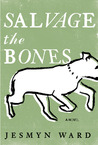
Snapshot Book Review: Salvage the Bones

Salvage the BonesSalvage the Bones by Jesmyn Ward
My rating: 4 of 5 stars

To my own surprise, this is the first book I have read about Hurricane Katrina. Although, to call it "a book about hurricane Katrina" would be doing it a disservice, as it is about much more than that. I would be much more inclined to say that it is a book about the impoverished culture of Bois Sauvage, or a book about dog fighting, or a book about family dynamics. It's about a girl and her brothers, or a boy and his dog. It's about the theme of birth, and about the theme of destruction, the promise of life and the struggle against death.

The character I both loved and hated the most was Skeetah's dog China; Ward does an excellent job describing both the savagery and the beauty of such a dog, as well as the loyalty that can develop between dog and master.

My main issue with Ward's writing is that she loves similes and metaphors just a little too much. It's beautiful writing, I will not deny her that. However, while I was captivated by her most poignant and perfectly placed literary devices, she often took me out of "the moment" with an overabundance of "his back was like a reed" and "her stomach protruded like a melon." What's most striking of all is that the metaphors and similes were usually not trite! There were just too many of them clogging up the progress of the story.

All in all, though, I am not sorry at all to have read Salvage the Bones. I can imagine it becoming a historical text, used as a literary reference to Hurricane Katrina, for years to come.

View all my reviews

Thursday, February 21, 2013

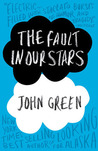
Snapshot Book Review: The Fault in Our Stars

The Fault in Our StarsThe Fault in Our Stars by John Green
My rating: 4 of 5 stars

An excellent example of a well written young-adult book, which is equally enjoyable by adults. The characters are endearing and thankfully not your typical "cancer patients;" instead they are surprisingly funny--the dry wit of children who are forced to grow up quickly but are still full of teenage angst and frustration, which has been an shockingly untapped resource for writers who perpetually cover the Terminal Patient.

My one big qualm, which I believe is shared by some other reviewers, is that real teenagers do not talk the way these characters talk. As one reviewer wrote, "My main issue with Augustus and Hazel was their penchant for dramatic, long and perfectly edited speeches. Yes, it was all very beautiful in a perfect kind of way that real things are not -- and more importantly in a way real teenagers are not."

Hazel and Augustus simply do not sound like teenagers. I asked a friend of mine who read the book why she thought Green didn't just make them adults or at least college-age. Her response was perfect: "He probably wrote it originally about adults and then his editor read it and was like, 'Nope this won't sell. But you know what will? A cancer story about kids." And so, in theory, Green had to re-write the story to make it about kids rather than adults, and ended up with too-perfect/smart-sounding teenagers.

View all my reviews

Monday, February 18, 2013

Snapshot Book Review: Hell-Bent

Hell-Bent: Obsession, Pain, and the Search for Something Like Transcendence in Competitive YogaHell-Bent: Obsession, Pain, and the Search for Something Like Transcendence in Competitive Yoga by Benjamin Lorr
My rating: 4 of 5 stars

As someone who has only relatively recently begun practicing bikram yoga as a form of "intentional stretching" for other sports, this book was really eye-opening. I practice at a studio called Yoga to the People, which about 6 months to a year ago was engaged in a lawsuit brought against them--and other studios--by Bikram. I didn't know much about the matter at the time, nor do I really know what the resolution is now, other than that the studios are still running and now offer many 60-minute abbreviated "hot yoga" classes.

That being said, I always yearned to know more about where this style of yoga came from and what the purpose of it was, when compared with other styles of yoga. Hell-Bent answered those questions, and more. My biggest issue with the book is its title and prologue: I sincerely thought that Lorr was going to spend the majority of the book discussing his experiences with competitive yoga. Instead, the book takes its time discussing individual cases of "what yoga did for Persons X, Y, and Z," as well as offering some historical context to yoga itself, and some scientific tangents about what happens to the body when exercising under extreme temperatures (which, I will admit, was one of my absolutely favorite parts of the book--I wish he had included more detail!). Learning so much about Bikram the man was also surprising, but I was impressed with the way that Lorr was able to refrain from offering his own judgement and instead offered his journalistic observations as well as empathetic accounts of people who represented both extremes: those who loved Bikram unconditionally and unreservedly, and those who despised him but revered him just the same.

I would recommend this book to anyone practicing or considering practicing any form of "hot" or Bikram yoga. Not so much in order to change your mind about the practice, but just as an educational tool. What makes it so remarkable is that the book doesn't try to change anyone's mind, nor does it offer its education as a play-by-play history or a pragmatic how-to manual; Lorr offers also memoir (his own) and a biography (Bikram's), all of which make it a loosely woven but informative narrative, which any interested Bikram yoga practitioner should peruse.

View all my reviews

Wednesday, February 13, 2013

Invisible but Present

Prompt: Write about an invisible condition or malady. An example is of something that qualifies is cancer. An example of something that does not count is an amputated leg.

Time: 10 minutes

Result:
I seriously fucking hate him. I know you're not supposed to say that about your dad, but it's true. He thinks he's helping, but he's not. "Just eat a candy bar." How does he not see that the candy bar is the whole problem?

I don't even like candy. I mean, obviously I do, or I wouldn't eat four bags of it in a row, but I'd rather have a milkshake or a Rice Krispy treat. Those things are hard, though.  Hard to get, hard to get rid of. Discreetly, anyway. Chocolate looks like poop, so even if there's any left in the toilet afterward, no one ever knows.

At least the nutritionist doesn't want me to eat a candy bar like my moron dad. "You need more protein. You're losing muscle mass. And stop skipping breakfast."

Like it's that easy. She's such a prissy bitch, with her cheap pink lipstick and growing-out dye job. I don't know why she things anyone would follow her food advice, the fat cow. At least she's the easiest to handle.  I just write what she wants me to eat in that dumb-ass food diary and tell her I have a fast metabolism. She would just about shit her pants if I wrote down what I really eat. Well, eat and then un-eat. You can't eat two bags of Lays, a half gallon of ice cream, twenty Chips Ahoy cookies, and a frozen pizza and keep a figure like mine.